
AN UNCIVIL WAR - The Battle of Orgreave. 18th June 1984.
“A brilliant account of one of the most important events of recent decades, told by those who were directly involved, illustrated by beautiful photography” – Alastair Campbell
"It's a brilliant book, in every way." - Lord Neil Kinnock.
The film Strike; An Uncivil War is on Netflix.
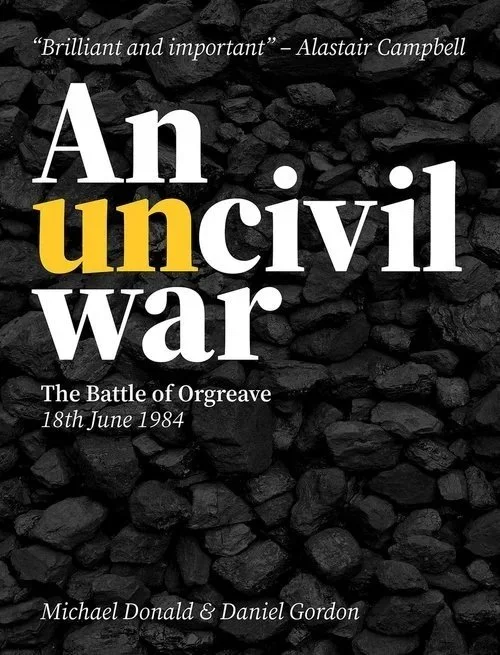
An Uncivil War - Published by The New European 2024. Click on the book to buy. ISBN—1-91171958-8978.

Terry Harrison. Striking miner. "I was brought up, where you just stood and listened, you were told what to do and you did it. No one had a voice. No one was heard."

Bruce Wilson. 1954 -2025. Striking miner. "At Orgreave I recognised one of our community bobbies. I felt sorry for the lad, I could tell he didn't want to be there. I heard later he'd comitted suicide. So sad."
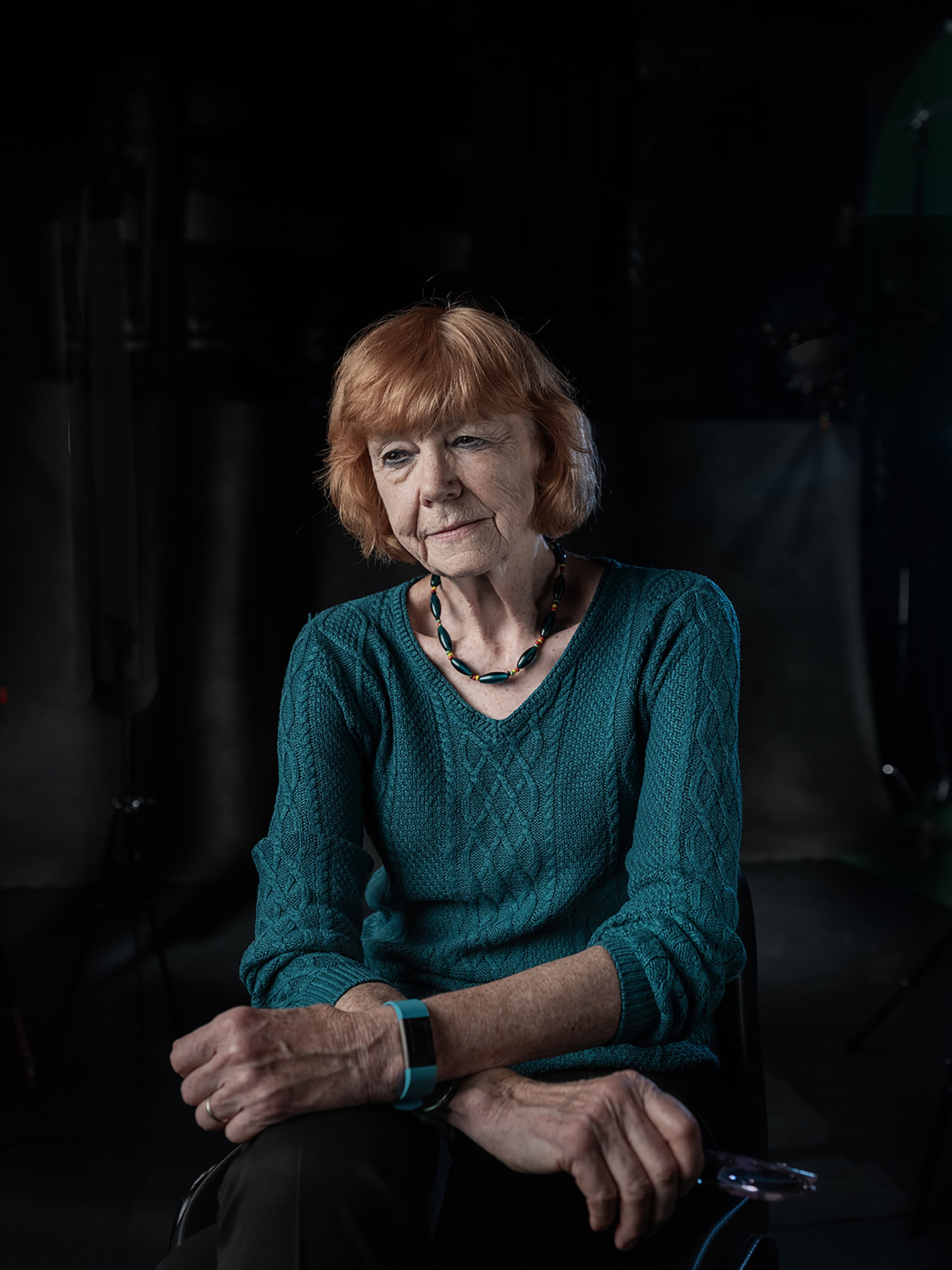
Dame Vera Baird DBE KC. Defence Barrister at the Orgreave trial. "It was as if the whole world had turned against them. And it didn't stop with the miners, it was their whole families."

Betty Cook. Women Against Pit Closures. "A lot of people lost their homes. A lot really struggled and feeding a family was difficult. We definitely needed soup kitchens. Pickets with families got £1 a day but the single miners didn’t get anything so we tried to do food parcels for them."

Ian Mitchell. Striking miner. " The president of our union came out. He pulled down the union banner and said, 'We’re fighting today to defend these jobs, these pits, and as communities’. It's war." and the place erupted. I felt ten feet tall."

Don, striking miner, and Jackie Keating. "We didn't recognise but we were both in and out of depression. Don absolutely hated it, 'I provide for my children', but then he couldn't. It almost broke him." Jackie.

Stephen Whyles. Strike breaker. "Going back that first morning it felt like I was walking to the gallows. The devastating bit was the loss of the camaraderie you get with your work colleagues."

Stefan Wysocki. Striking miner. "We were found Not Guilty. I was free to walk and that’s what I did. I come out of there because I was free. There were nothing else there they were going to do to me."

Agnes Currie. Women Against Pit closures. "The community. Nobody were better than anybody else. It was absolutely brilliant. I wish it could be like that for just a week, so as the kids today could see what it was like."

Nick Jones. BBC Industrial correspondent. "I was at this conference in LLandudno and at the end Scargill’s driver, said to me, “Nick,” he said, “it’s my wedding anniversary, can you do me a favour? I know you’re driving back to London, would you give Arthur a lift?” I said, “Er hm, well, er okay, yeah, of course.”"

Craig Waddington. Striking miner. "I was a 22-year-old facing life imprisonment, I will not kid you on, I was shocked to my core. I was struck dumb. Just for picketing."

Liz French. Women Against Pit Closures. "We were all over fundraising. This woman asked if I’d go to Ireland with Women Against Strip Search because my husband was in prison. She forgot to tell me, mind there were 50 girls, that we’re sleeping rough in Liverpool until we get on the boat and they’re all lesbians. It was great."

Tyrone O'Sullivan. 1945-2023. Striking miner. "There was no sorrow. We’d battled. That’s all you can do in life. I do say to kids today in school. 'There’s no shame in failing only in not having tried.' I think it’s important. We tried. We may have failed, but we tried.”

Mick Betts. Striking miner. "Money can’t buy integrity, so no matter what they got, they’ll never have what I got and it’s there in me heart, it’s there and money can’t buy that. No amount of money could."
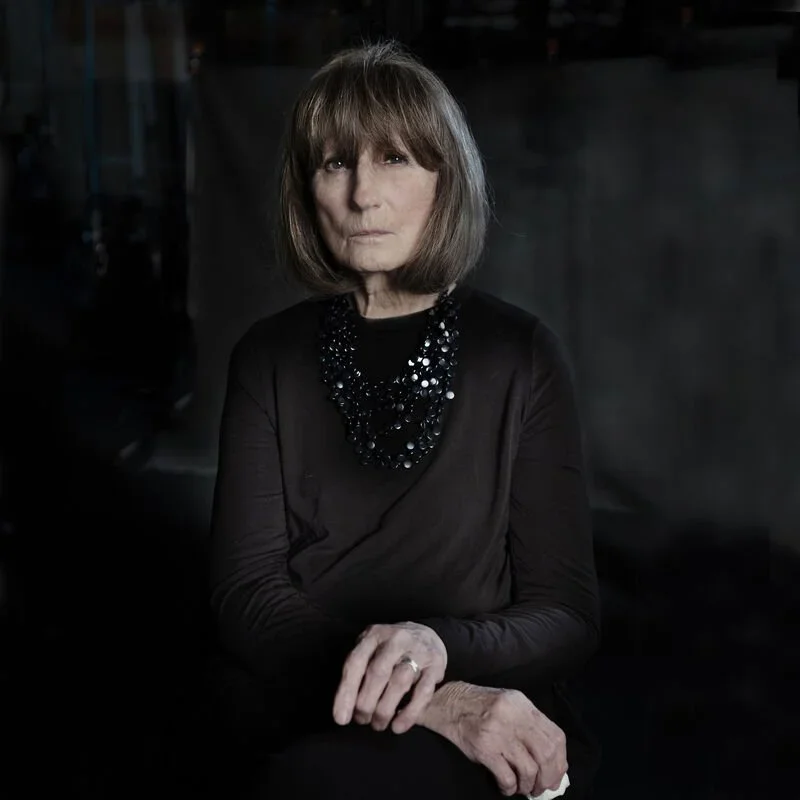
Gareth Peirce. Defence solicitor at the Orgreave trial. "The whole trial was shocking, from start to finish, it didn't stop.It was a deliberate intention to send these men to prison and destroy a union."
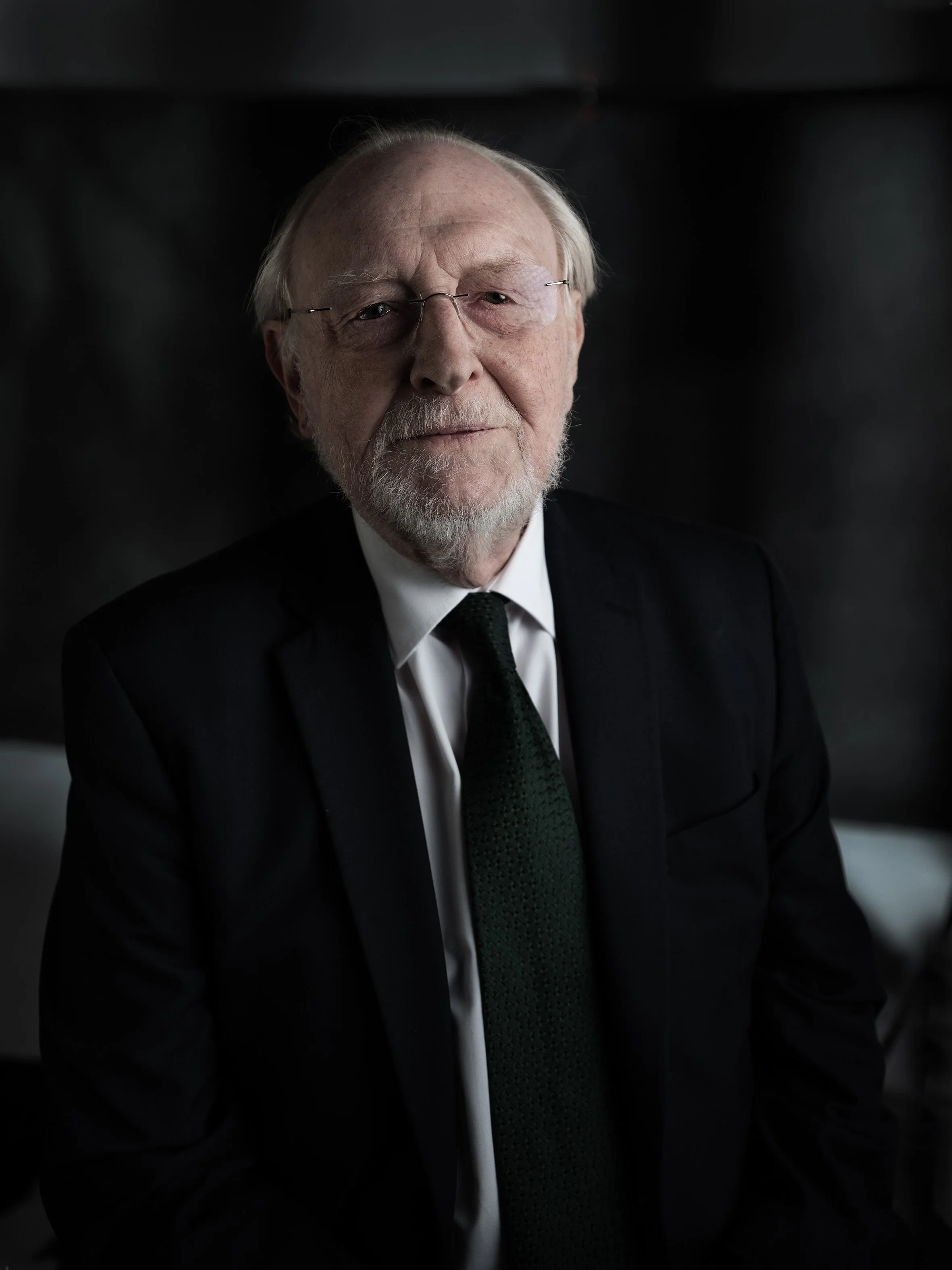
Neil Kinnock. Labour leader 1983-1992. "The miner's strike, the conduct of officialdom in the course of the strike, and it's highlighted by Orgreave, leaves a stain on British democracy."
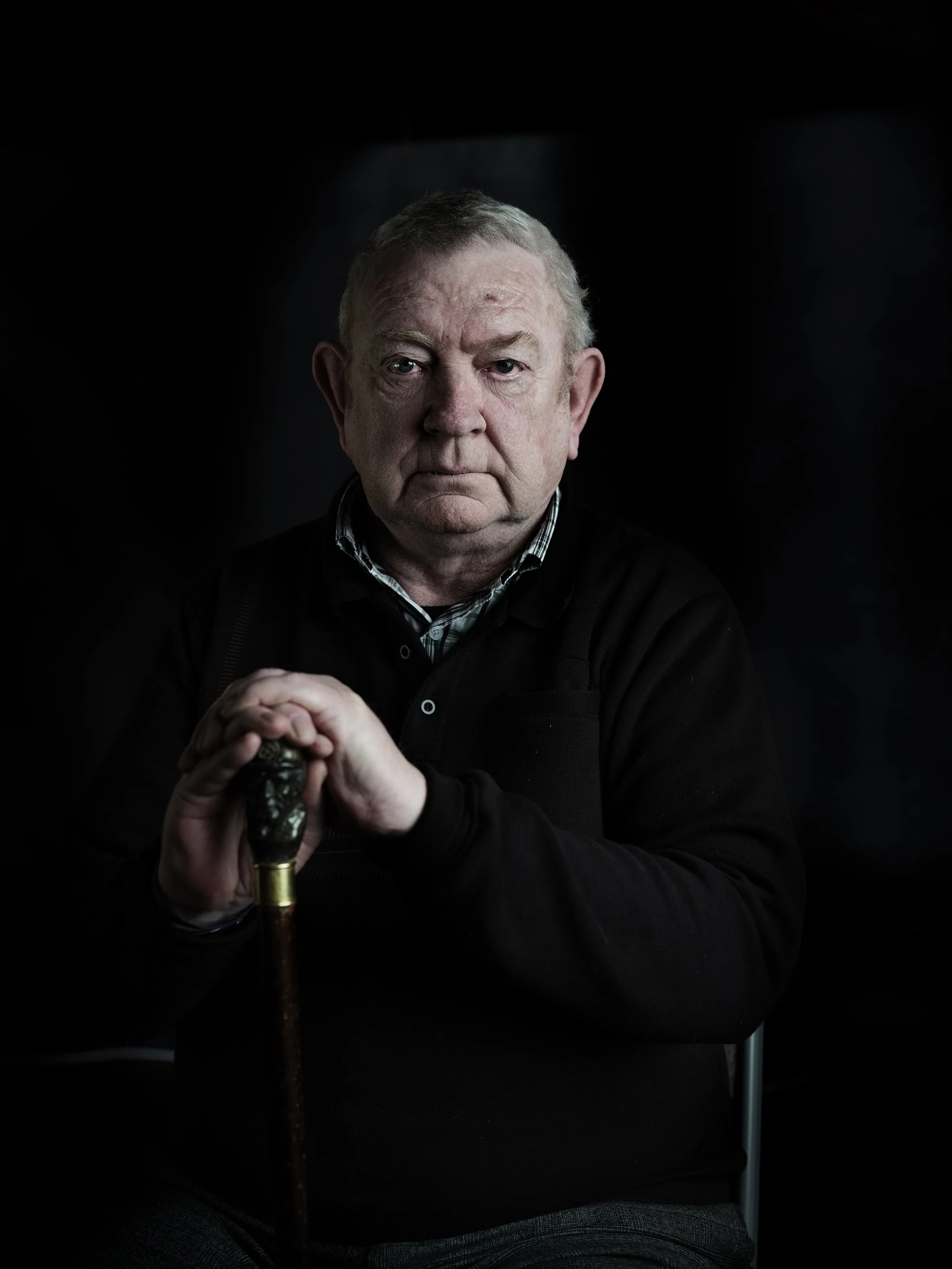
Gary Cox. Striking miner. "I've just been diagnosed with COPD, miner's lung. Every miner that goes underground knows that's gonna be your end. But that's the job."

Striking miners return to the scene of The Battle of Orgreave, 2023.
I grew up in Belfast so the impact of the 1984 miners' strike for me was diminished. It felt like a news story from another country. Coincidentally, I had been born in Wakefield - because my dad was building a bridge on the M1 between Leeds and Barnsley - but left at just a few months old. I have no memories of it, but my mum used to tell us about not being able to hang clothes out because they would come in black. Later, when I was a teenager, I remember seeing the horses charging at Orgreave on the nine o'clock news and Margaret Thatcher talking about "the enemy within", but little else. I had considered it a piece of history, something in the past that didn't really matter any more. That was before working on this project.
What became clear quite quickly was just how divisive the strike was, not just between the two sides, but also within the TWO sides. For many, the scars of those divisions have still not healed. But what has stayed with me most is not the injustices or grievances or bitterness or anger, all of which are valid, but rather the deep-rooted sense of community, of belonging and collective purpose, that defined the mining communities prior to the 1984-85 strike. It wasn't something added on or woven in with an outcome in mind. It had evolved over generations and is what the communities were at their very heart. It manifested itself in trust, camaraderie, caring, and hard work. It had prevailed in all the mining villages since the Industrial Revolution. And then it was gone.
This book is about the sun setting on that last generation of mining communities. There is no romance. It was brutal. The demise was relatively quick, but it didn't happen overnight. If there was, however, one day upon which everything hinged, when everything changed, a "before and after" day, that day was Monday, 18 June, 1984. The events of that day would change the industrial and the socio-economic landscape of Britain for ever. The day would become known as the Battle of Orgreave.
There was a canyon between the two sides of the strike, and much disagreement within each camp.
In many respects they were both right. They both believed in what they were trying to achieve and they were both led by individuals who would stop at nothing to realise respective goals. This much is not debatable. It could be argued that one side was looking to the future while the other was clinging to the past. Regardless, they both believed what they were doing was for the better. In many respects, as it turned out, they both got it wrong.
This is not a history lesson, it is an attempt, through the words of those who were there, to seek an understanding of what motivated both sides, and for me, to gain some small insight into what it must have felt like to be the people who lived through the terrible struggles of those 12 long months. And to learn from those words and experiences.
Some would argue it was inevitable, there was certainly much preparation for it. No matter, the fallout has been profound and lasting, and many would say not for the better.
Something was lost that day. Not the bloody battle itself, the victory was hollow. Perhaps what was lost, in different ways on both sides, was our sense of who we arc as a people; as Britain and what we think that means. And like selling the family silver, it may be lost for ever.
Dan and I have worked on numerous projects together over the years. When he started making the film, Strike; An Uncivil War I asked to get involved and that's how this book came about. (Daniel Gordon is a double BAFTA winning film director and long time collaborator).